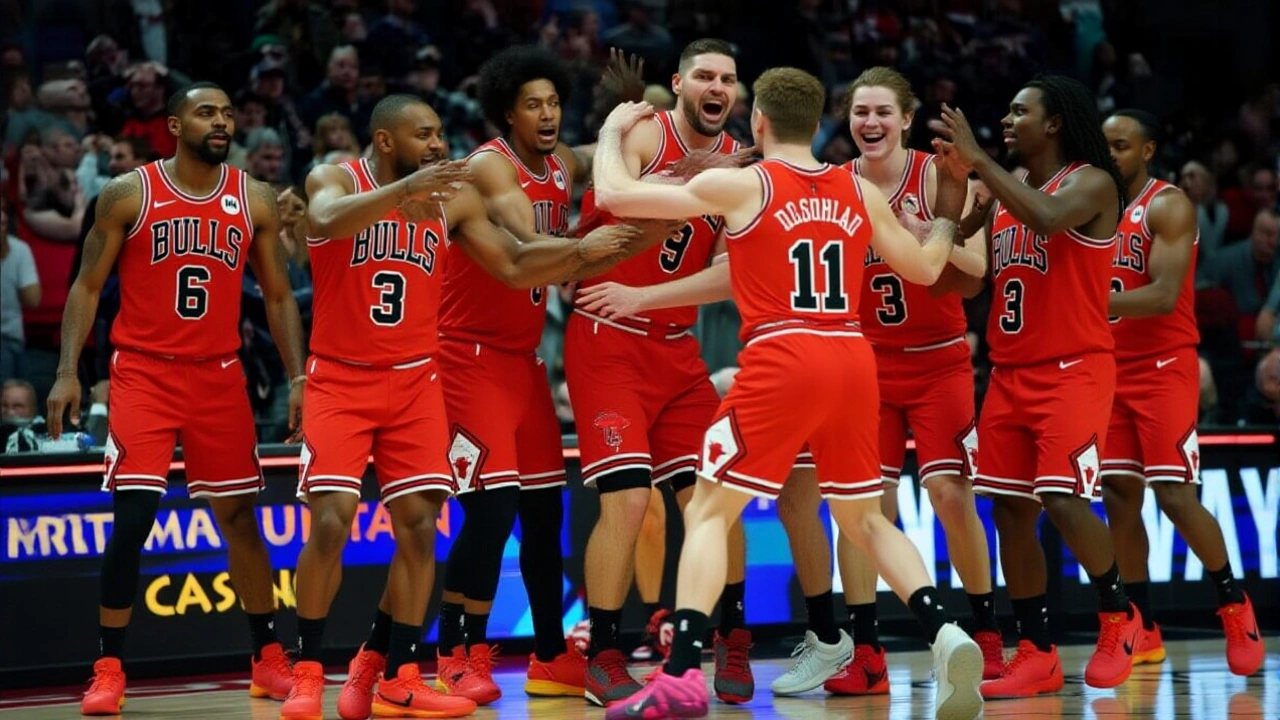
It wasn’t just a win—it was a statement. On Friday night, November 21, 2025, the Miami Heat turned the United Center into their personal playground, dismantling the Chicago Bulls 143-107 in an Emirates NBA Cup Group C showdown. The final score didn’t lie: Miami didn’t just beat Chicago—they erased any doubt about who’s playing at another level this season. And it all started with Kel'el Ware, whose 20 points and 14 rebounds were the quiet engine behind a demolition that left Bulls fans stunned and NBA analysts scrambling for comparisons.
A Night of Offensive Fireworks
The game began with Chicago looking sharp, racing out to an 18-11 lead in the first 5½ minutes. But then—boom. Miami responded with a 53-21 run over the next 15 minutes, turning a close contest into a rout before halftime. By the end of the third quarter, the Heat had built a 34-point lead. By the final buzzer? A 36-point margin, their second-largest of the 2025-2026 season. For Chicago, it was their worst defeat of the year, surpassing their previous worst of 25 points against the New York Knicks on November 2.
It wasn’t just Ware. Norman Powell added 19 points and two steals. Bam Adebayo chipped in 18. Pelle Larsson and Davion Mitchell each scored 16. Miami’s offense was surgical, efficient, and relentless—hitting 18 three-pointers and shooting 54% from the field. They scored 70 points in the first half alone, the first time they’ve done that since the 2022-23 season.
And here’s the wild part: this was Miami’s fourth game this season topping 140 points. That matches their total from the previous seven seasons combined (2018-19 through 2024-25). They’re averaging 124.8 points per game—best in the NBA. This isn’t a hot streak. It’s a transformation.
Chicago’s Collapse and a Controversial Ejection
For Chicago, the night was a cascade of frustrations. Ayo Dosunmu led the Bulls with 23 points and three threes, while Josh Giddey nearly notched a triple-double with 19 points, 11 rebounds, and nine assists. But even their best efforts couldn’t stem the tide. The offense stalled. The defense looked lost. And then came the moment that turned tension into chaos.
In the third quarter, Kevin Huerter—Chicago’s sharpshooter—waved his hand in frustration after a foul call went against him. The ball, still in play, bounced off his outstretched fingers and struck referee Che Flores in the leg. The officials reviewed it. The league’s rules are clear: any intentional gesture toward an official, even if accidental, can result in ejection. Huerter was tossed. The Bulls lost their last spark. The crowd groaned. Miami kept scoring.
Standings Shift in the Emirates NBA Cup
With the win, Miami improved to 10-6 overall and 2-1 in the Emirates NBA Cup, placing them just half a game behind the Milwaukee Bucks (2-0) for the top spot in East Group C. Chicago, now 8-7 overall and 1-2 in Cup play, tumbled to fourth in the group—behind the New York Knicks and ahead of the Charlotte Hornets. The Cup, introduced this season as a mid-season tournament sponsored by Emirates, has turned into a real catalyst for momentum. Teams aren’t just playing for pride—they’re fighting for seeding in the knockout rounds.
And Miami? They’re playing like they’re already in the finals. Their ball movement, spacing, and three-point volume are unlike anything we’ve seen from them in years. Coach Erik Spoelstra has unlocked something—maybe a new identity. The Heat used to be defined by defense and grit. Now? They’re a blur of motion, open looks, and unguardable transitions.
What This Means for the Rest of the Season
This isn’t just a fluke win. It’s a signal. The Heat are no longer just contenders—they’re a threat to anyone in the East. Their depth is remarkable: nine players scored in double figures. Ware, a 2024 first-round pick, is emerging as a defensive anchor and rebounding force. Adebayo is playing like an All-NBA candidate. Powell, acquired in the offseason, is providing the veteran scoring punch they’ve lacked.
For Chicago, the questions multiply. Can they fix their defense? Is their starting lineup too slow against elite teams? And why does every big game feel like a test they’re failing? Their front office, headquartered at 1616 East Wood Street in Chicago, now faces a tough winter of roster evaluation. With the trade deadline looming in February, this loss might be the wake-up call they can’t afford to ignore.
Historical Context: A New Era for Miami
Think back to the Heat’s last era of dominance—the LeBron era. They were physical, slow-paced, and defensive-minded. This team? It’s the opposite. They’re fast. They shoot. They rotate. They’re the NBA’s version of a symphony orchestra—every instrument in perfect harmony. Their four 140-point games this season alone outpace their entire output from 2018 to 2025. That’s not evolution. That’s revolution.
And it’s happening under the radar. No one’s talking about Miami as the favorite to win the East. But if they keep this up? They will be.
Frequently Asked Questions
How does Kel'el Ware’s performance impact the Heat’s future?
Ware’s 20-point, 14-rebound night isn’t just a flash in the pan—he’s becoming Miami’s most reliable interior presence. As a 2024 draft pick, his ability to protect the rim and grab offensive boards gives the Heat a new dimension they lacked since Hassan Whiteside left. If he continues at this pace, he could be a cornerstone for their next championship window, especially with Adebayo’s contract up in 2027.
Why did the Heat suddenly become such a high-scoring team?
It’s a combination of roster changes and system adjustments. The addition of Norman Powell and Pelle Larsson created spacing that opened driving lanes for Davion Mitchell and Tyler Herro. Coach Spoelstra’s shift to a 7-out offense—where every player can shoot—has made Miami nearly impossible to defend. They’re taking 38 threes per game, up from 29 last season. Their assist-to-turnover ratio is now 2.1:1, the best in the league.
What does this loss mean for the Chicago Bulls’ playoff chances?
Chicago’s playoff hopes are hanging by a thread. At 8-7, they’re just one game above .500, and their net rating (-3.2) ranks 19th in the league. They’ve lost four of their last five games by 15+ points. With the Eastern Conference getting deeper—Milwaukee, Boston, and Miami all look like top-four locks—Chicago may need a midseason trade to stay relevant. Their defense, allowing 121 points per game, is the biggest red flag.
How significant is the Emirates NBA Cup in the broader NBA landscape?
The Cup has added real stakes to midseason games that used to feel like glorified scrimmages. Teams are now treating group play seriously—Miami’s 2-1 record puts them in direct contention for home-court advantage in the knockout rounds. It’s also giving younger players like Ware and Larsson high-leverage minutes. The NBA hopes this format boosts viewership and fan engagement during the long winter stretch—and early returns suggest it’s working.
Was Kevin Huerter’s ejection justified?
Yes. While Huerter didn’t intend to hit referee Che Flores, NBA rules classify any contact with an official—intentional or not—as a technical foul and automatic ejection if deemed excessive. The league reviewed the play and upheld the call. It’s a controversial rule, but it’s been consistent since 2022. The incident highlights how thin the line is between frustration and consequence in high-pressure games.
What’s next for the Miami Heat and Chicago Bulls?
Miami faces the New York Knicks on November 24 in a crucial Cup matchup that could decide home-court advantage. Chicago travels to Charlotte on November 25, needing a win to avoid falling further behind in the group. Both teams have five Cup games left. For the Heat, this win could be the springboard to a deep Cup run. For the Bulls? It might be the last chance to find their rhythm before the trade deadline.